Enter Password
CRM Stack Digitization
Project Overview
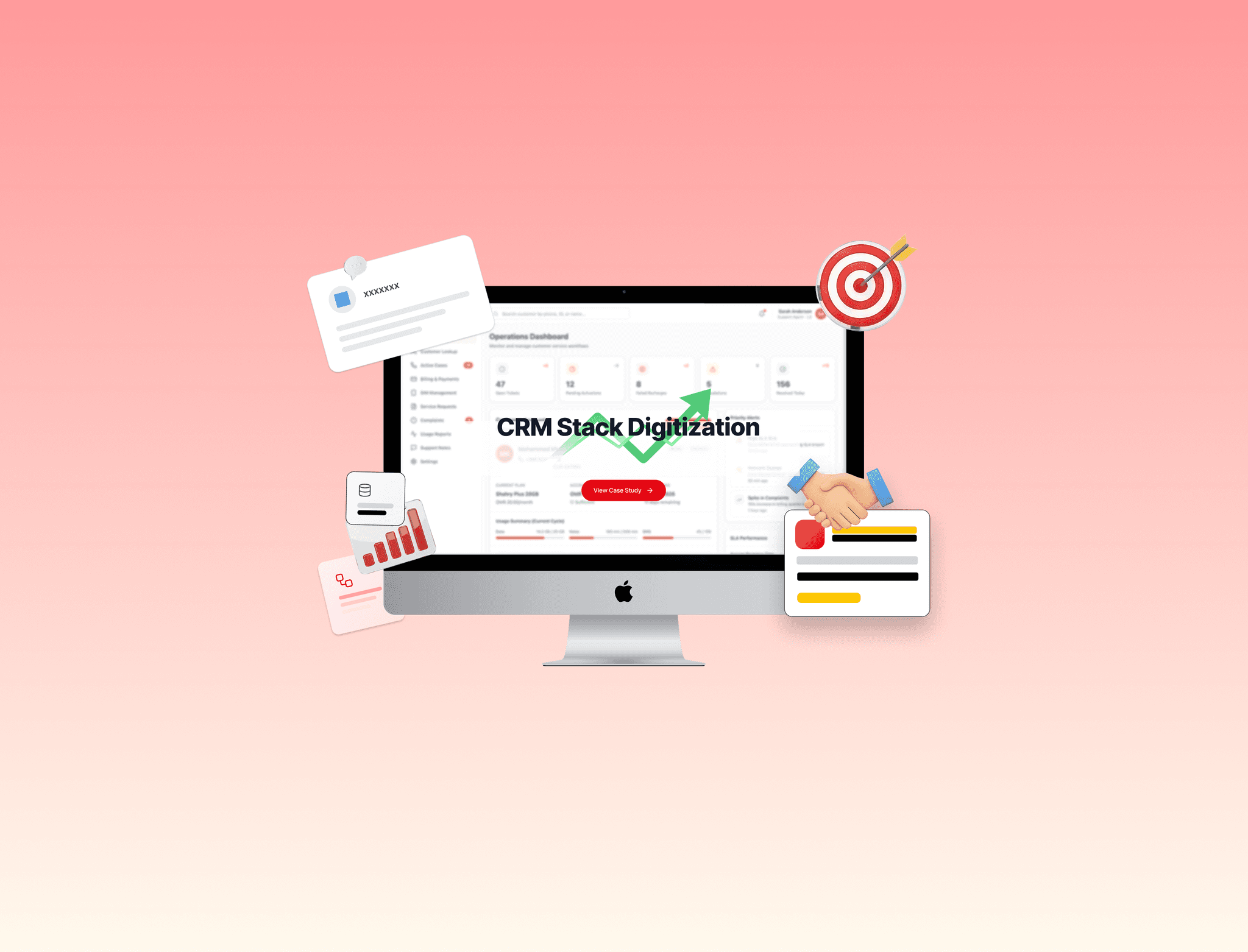
This case study highlights my contribution to modernizing Tier-1 Multinational Telecommunications Provider (GCC Region) enterprise CRM for frontline support teams in high-volume telecom operations. I focused on improving information architecture, simplifying agent workflows, and increasing design consistency to make the system clearer and more efficient.
This case study highlights my contribution to modernizing Tier-1 Multinational Telecommunications Provider (GCC Region) enterprise CRM for frontline support teams in high-volume telecom operations. I focused on improving information architecture, simplifying agent workflows, and increasing design consistency to make the system clearer and more efficient.
Beyond visual updates, the work centered on reducing task steps, improving navigation, and supporting smoother rollout through usability testing and cross-functional collaboration.
Beyond visual updates, the work centered on reducing task steps, improving navigation, and supporting smoother rollout through usability testing and cross-functional collaboration.
Role
Senior UX Designer
Timeframe
April 2022 – June 2023 (14 months)
Scope
Optimized agent workflows, navigation, reusable components, and rollout validation processes.
Optimized agent workflows, navigation, reusable components, and rollout validation processes.
Team Settings
UX researchers, product managers, engineering teams, and frontline support operations
UX researchers, product managers, engineering teams, and frontline support operations
What I Delivered

Restructured information architecture to make key CRM workflows easier for agents to navigate
Redesigned task-based agent workflows to reduce task steps across high-volume support operations
Created wireframes and prototypes to improve navigation clarity and streamline core actions
Refined reusable CRM components and interaction patterns for greater interface consistency
Led usability testing with frontline support agents to uncover workflow friction and improve task accuracy
Partnered with product managers and engineering teams during staged rollout validation to support adoption of redesigned workflows
What I Delivered
Restructured information architecture to make key CRM workflows easier for agents to navigate
Redesigned task-based agent workflows to reduce task steps across high-volume support operations
Created wireframes and prototypes to improve navigation clarity and streamline core actions
Refined reusable CRM components and interaction patterns for greater interface consistency
Led usability testing with frontline support agents to uncover workflow friction and improve task accuracy
Partnered with product managers and engineering teams during staged rollout validation to support adoption of redesigned workflows
The Expanded Reality
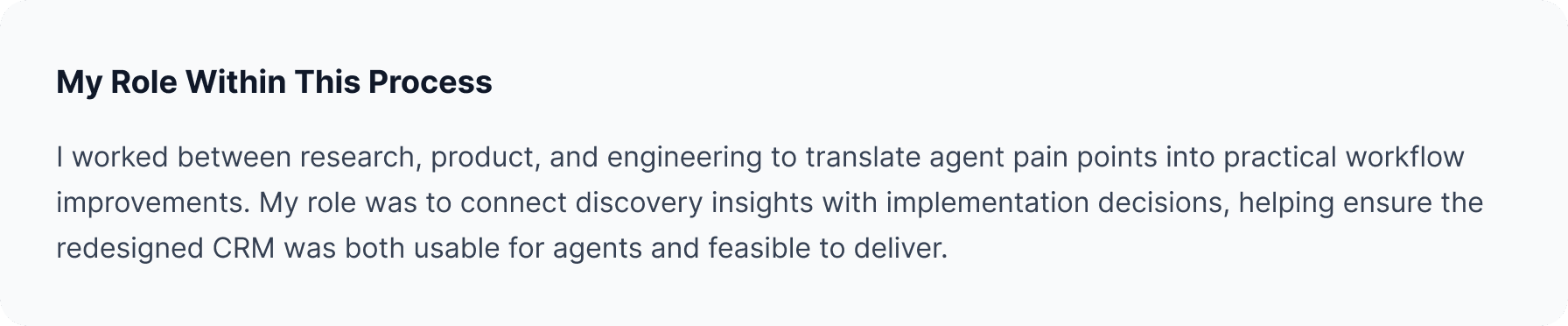
This project required more than interface design. I worked across research insights, workflow design, product priorities, and engineering constraints to improve how agents completed critical support tasks inside a complex CRM environment. My role involved simplifying structure, validating design decisions with users, and helping cross-functional teams align on solutions that were both usable and feasible to implement.
This project required more than interface design. I worked across research insights, workflow design, product priorities, and engineering constraints to improve how agents completed critical support tasks inside a complex CRM environment. My role involved simplifying structure, validating design decisions with users, and helping cross-functional teams align on solutions that were both usable and feasible to implement.
The Critical Pain Points
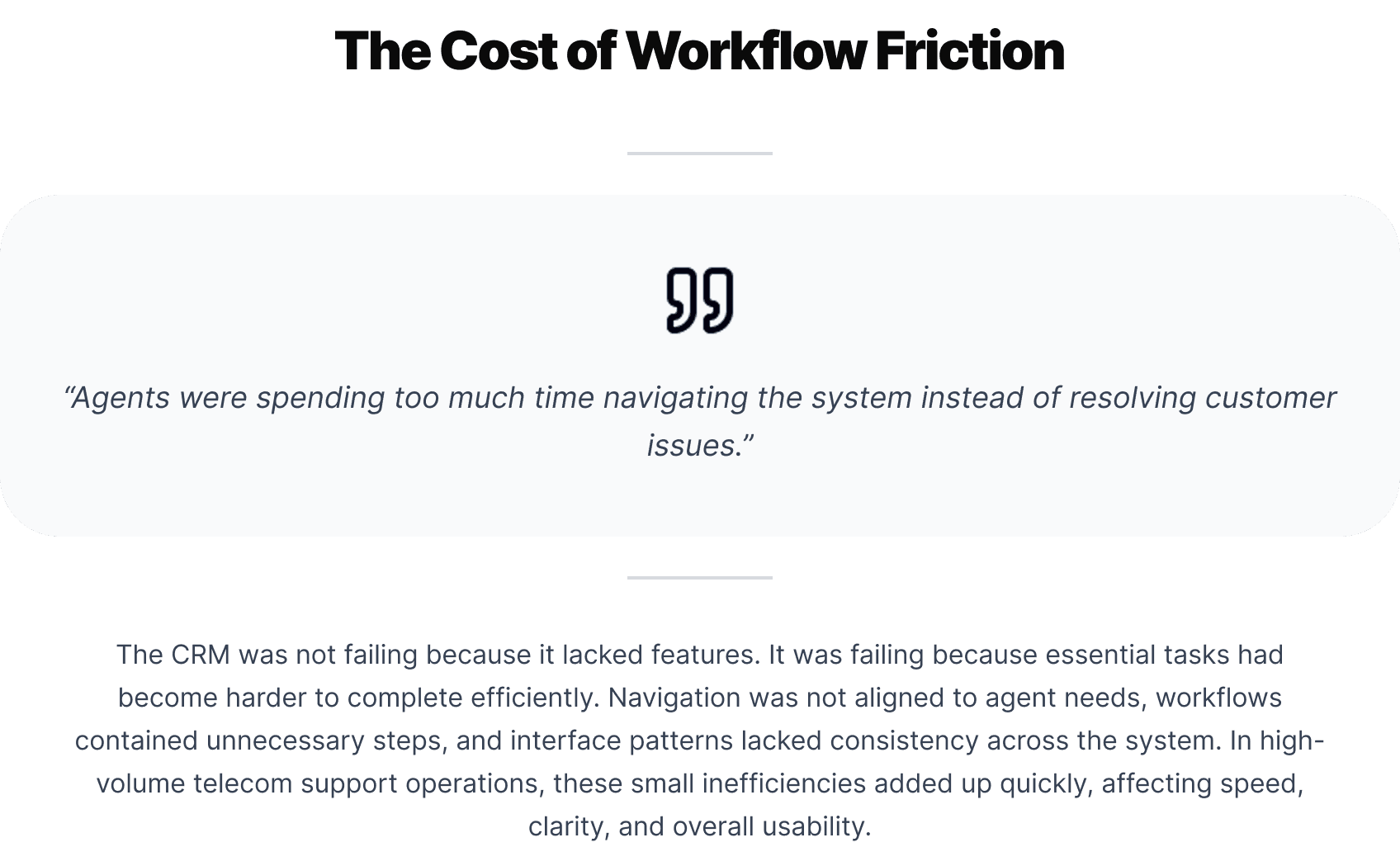
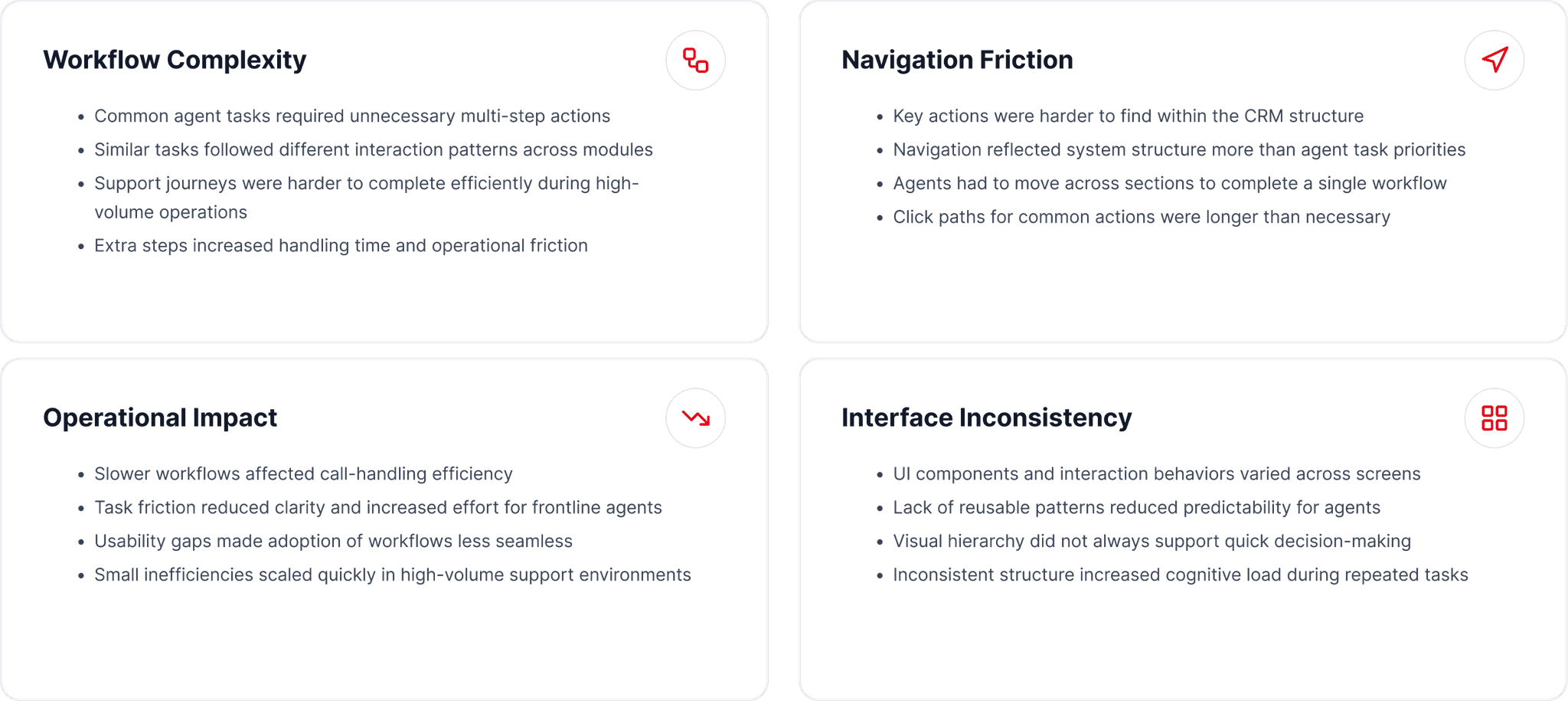
These were not isolated usability issues. They reflected deeper structural problems in the CRM experience. As workflows expanded over time, agents had to navigate more steps, adapt to inconsistent patterns, and spend extra effort completing common support tasks. The system struggled with:
These were not isolated usability issues. They reflected deeper structural problems in the CRM experience. As workflows expanded over time, agents had to navigate more steps, adapt to inconsistent patterns, and spend extra effort completing common support tasks. The system struggled with:
Operational Consequences
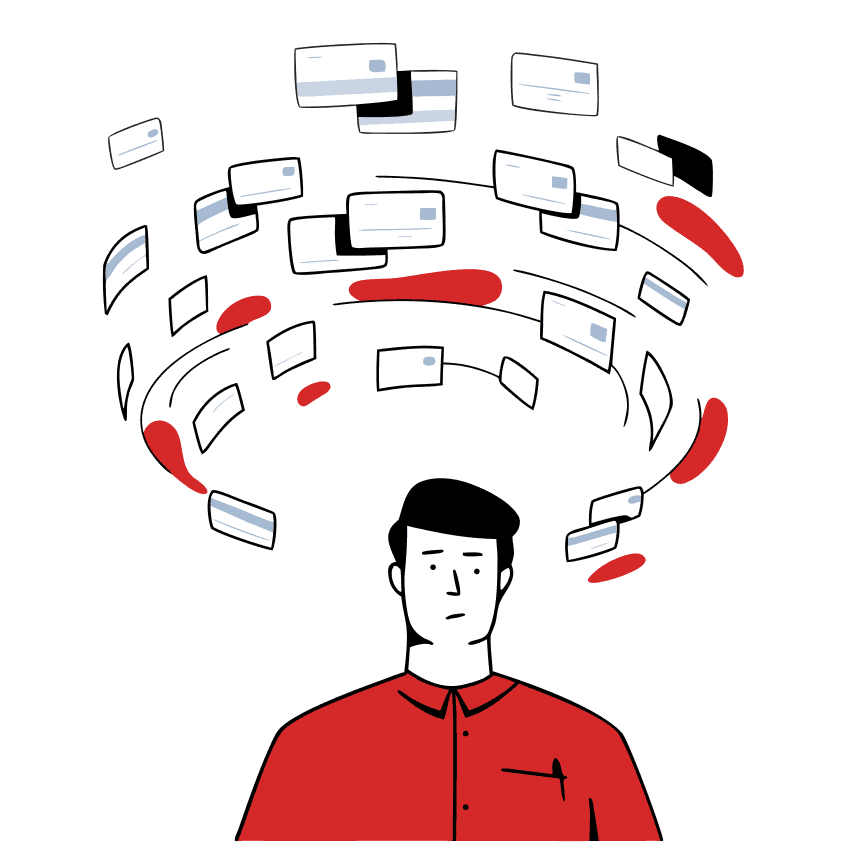
When CRM workflows become harder to navigate, agents spend more time finding information, repeating steps, and switching between sections to complete common tasks. In high-volume support operations, these inefficiencies slow task completion and reduce overall efficiency.
When CRM workflows become harder to navigate, agents spend more time finding information, repeating steps, and switching between sections to complete common tasks. In high-volume support operations, these inefficiencies slow task completion and reduce overall efficiency.
Process
This project focused on improving the structural usability of Ooredoo’s enterprise CRM rather than refreshing its visual layer alone. My approach centered on understanding agent pain points, simplifying task flows, improving navigation clarity, and validating changes through iterative testing and cross-functional collaboration.
This project focused on improving the structural usability of Ooredoo’s enterprise CRM rather than refreshing its visual layer alone. My approach centered on understanding agent pain points, simplifying task flows, improving navigation clarity, and validating changes through iterative testing and cross-functional collaboration.
Our Approach: Dual-Track Agile
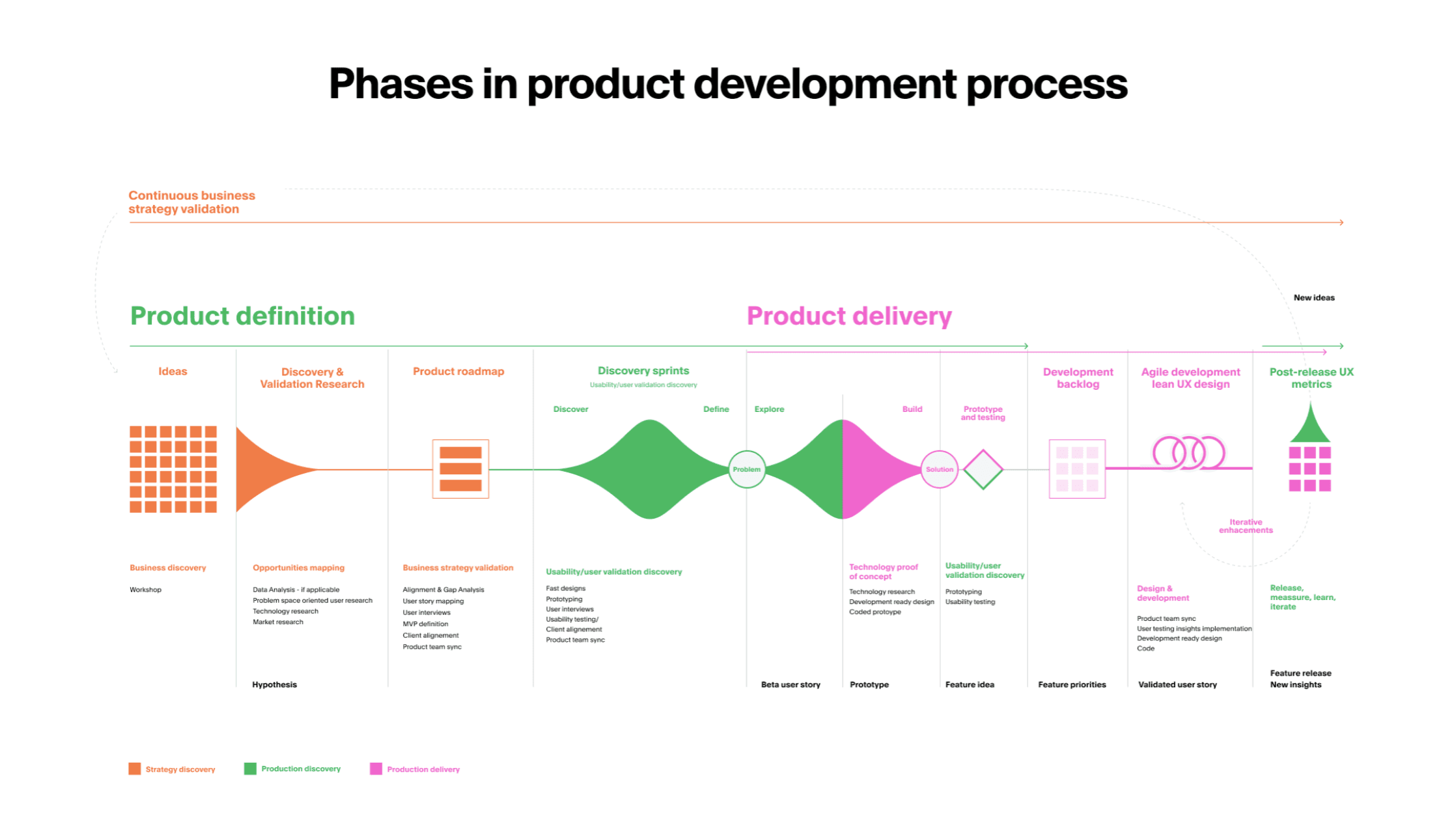
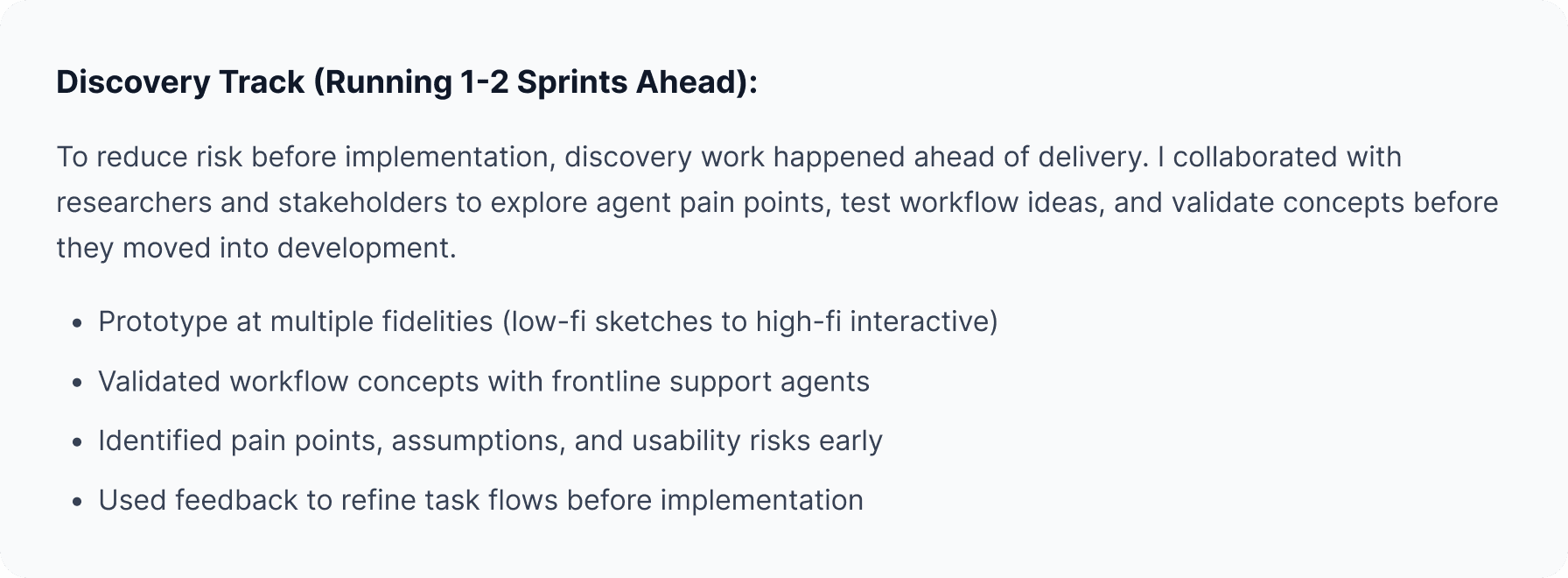
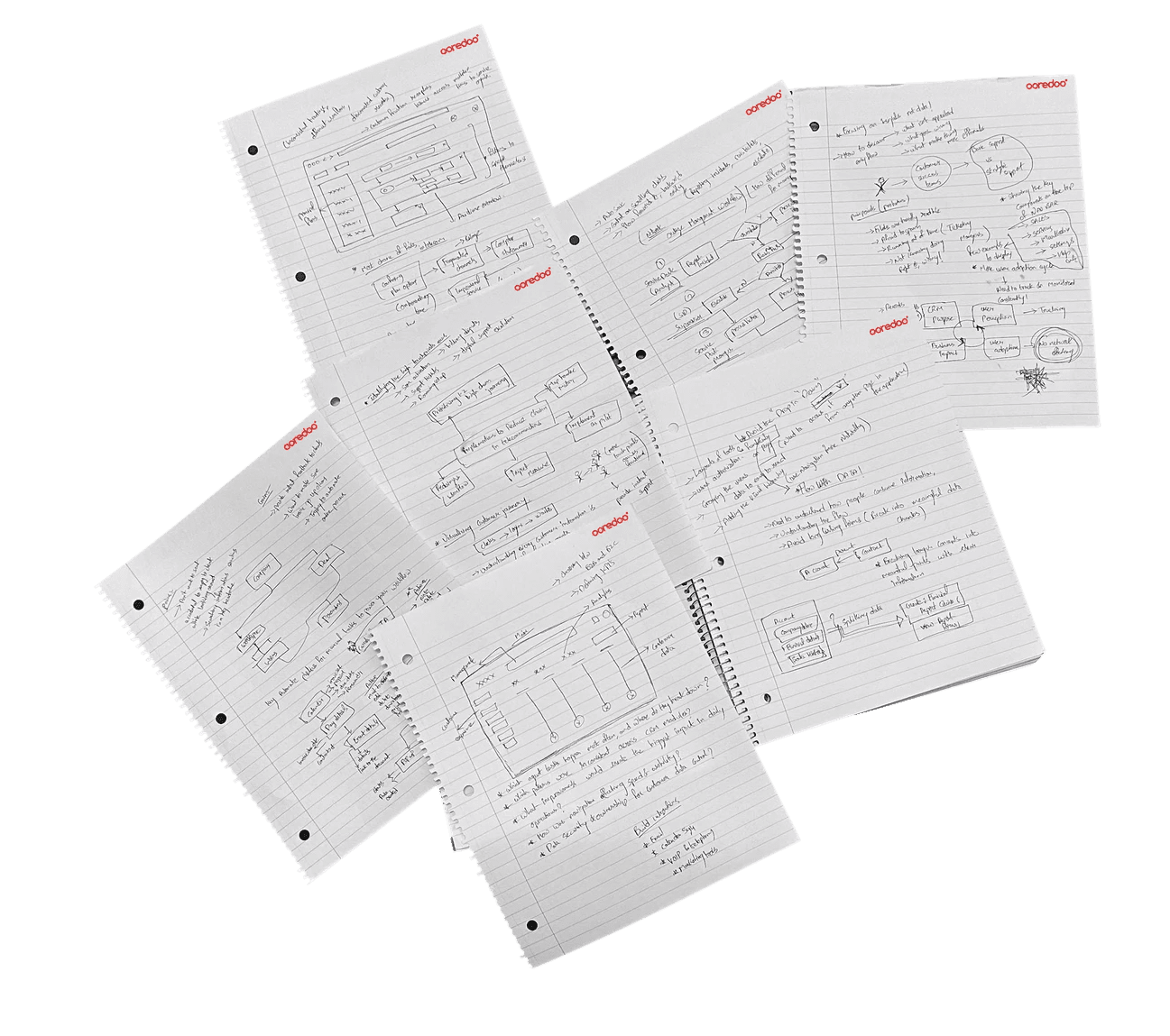
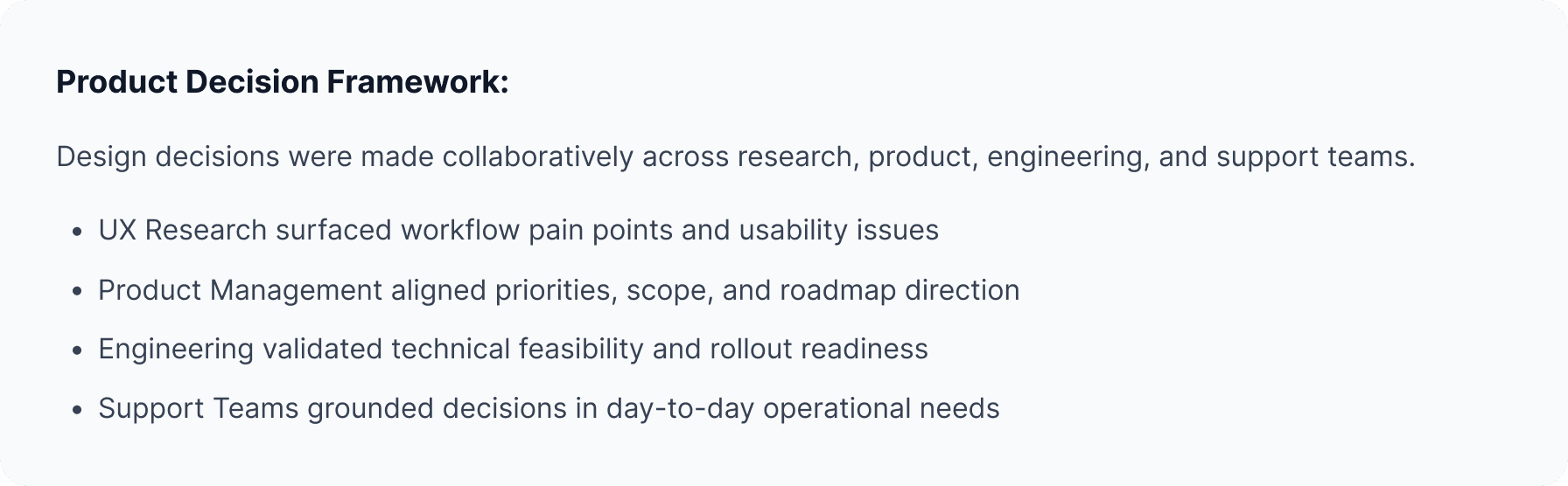
We worked in a dual-track agile model where discovery and delivery progressed in parallel. While design exploration and workflow validation happened ahead of implementation, product and engineering teams moved validated solutions toward rollout. This helped the team identify friction early, align on priorities, and reduce rework during delivery.
We worked in a dual-track agile model where discovery and delivery progressed in parallel. While design exploration and workflow validation happened ahead of implementation, product and engineering teams moved validated solutions toward rollout. This helped the team identify friction early, align on priorities, and reduce rework during delivery.
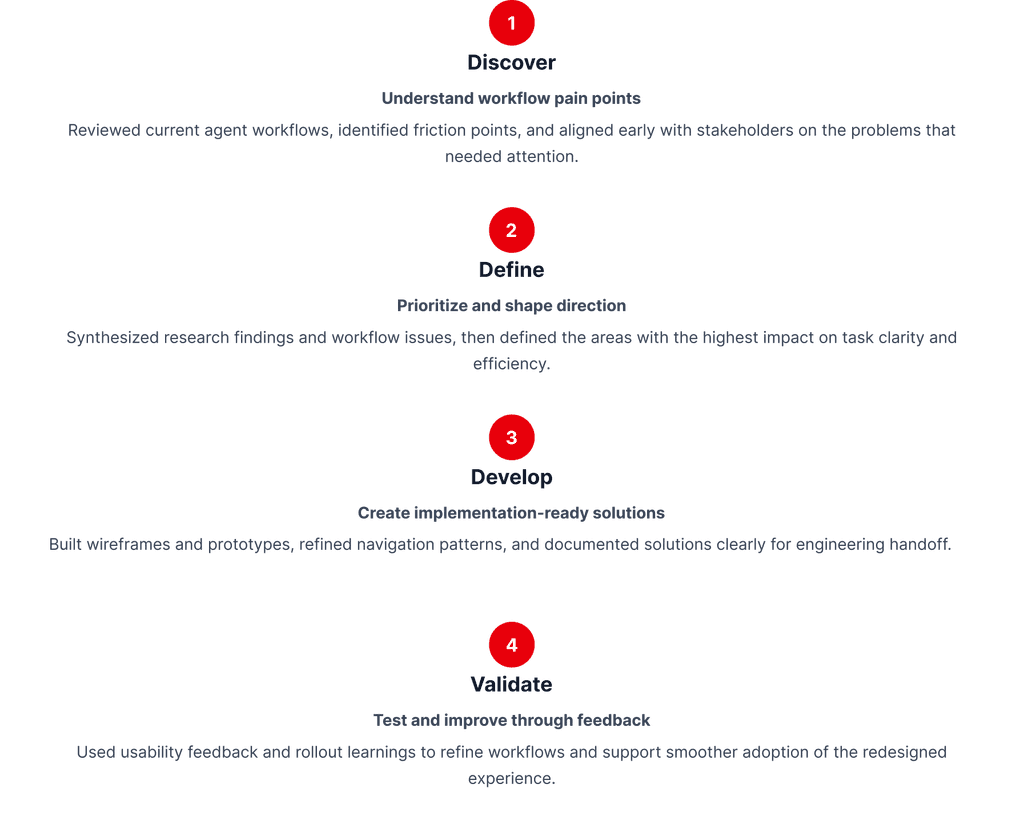
My Workflow for Each Sprint
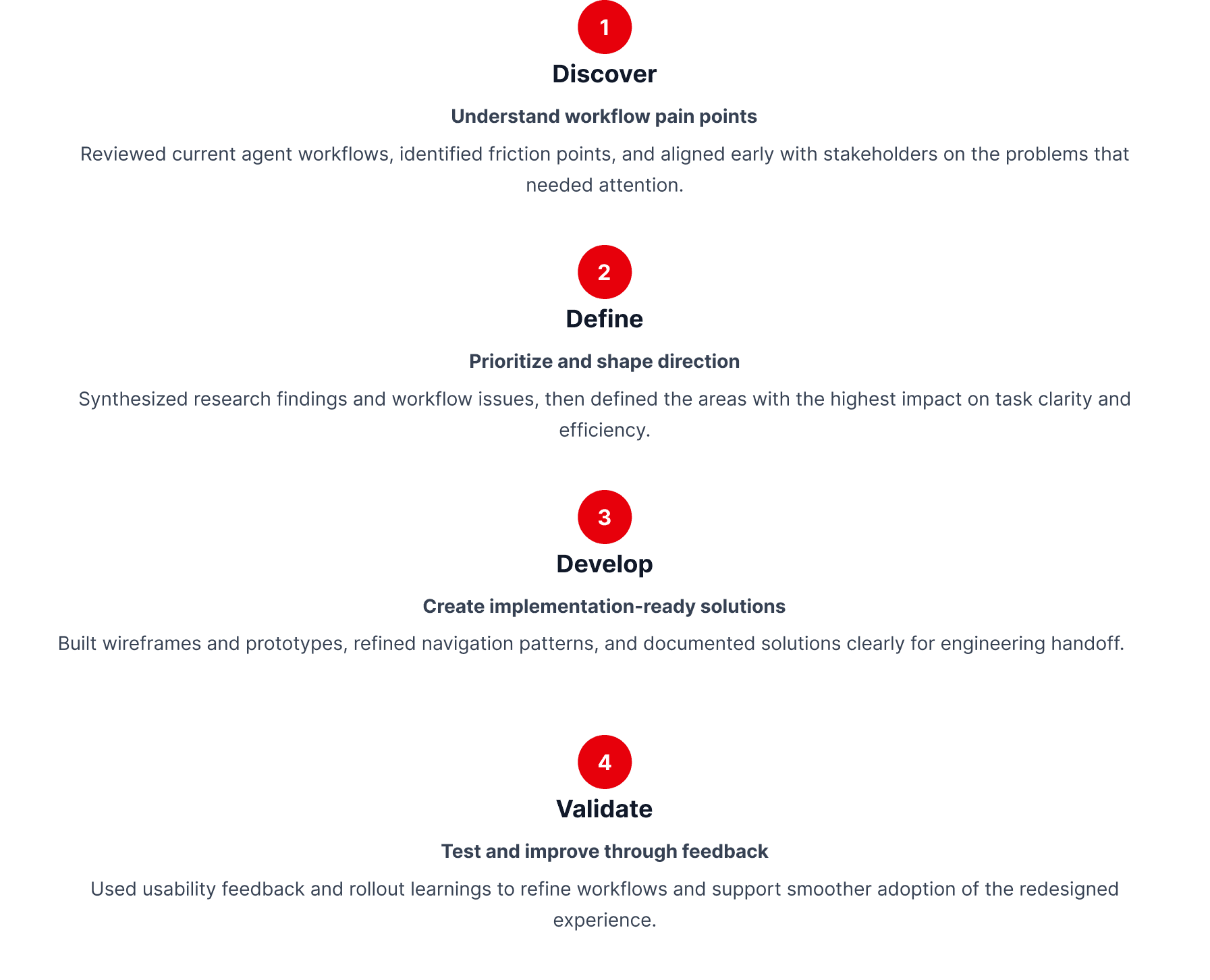
Each sprint focused on improving high-priority CRM workflows. I followed a consistent process to identify pain points, align with stakeholders, refine solutions, and support implementation through validation and delivery.
Each sprint focused on improving high-priority CRM workflows. I followed a consistent process to identify pain points, align with stakeholders, refine solutions, and support implementation through validation and delivery.

Solution
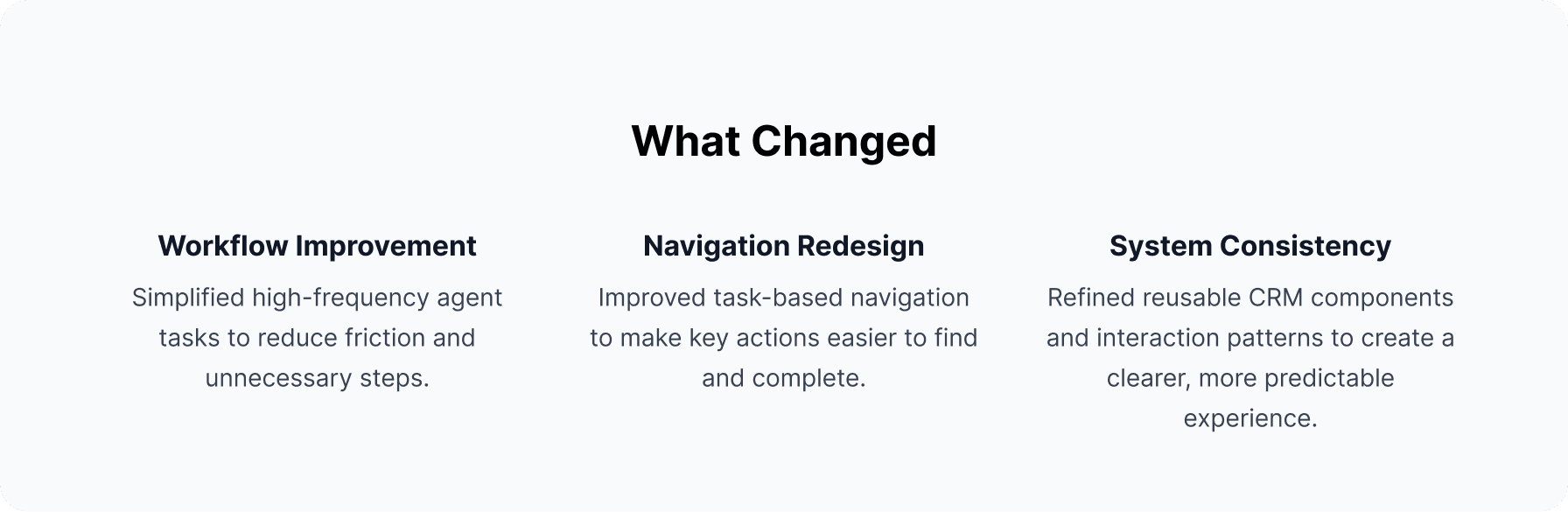
The solution centered on simplifying agent workflows, improving task-based navigation, and refining reusable interface patterns to support faster and more consistent support operations.
The solution centered on simplifying agent workflows, improving task-based navigation, and refining reusable interface patterns to support faster and more consistent support operations.
Validation and Impact
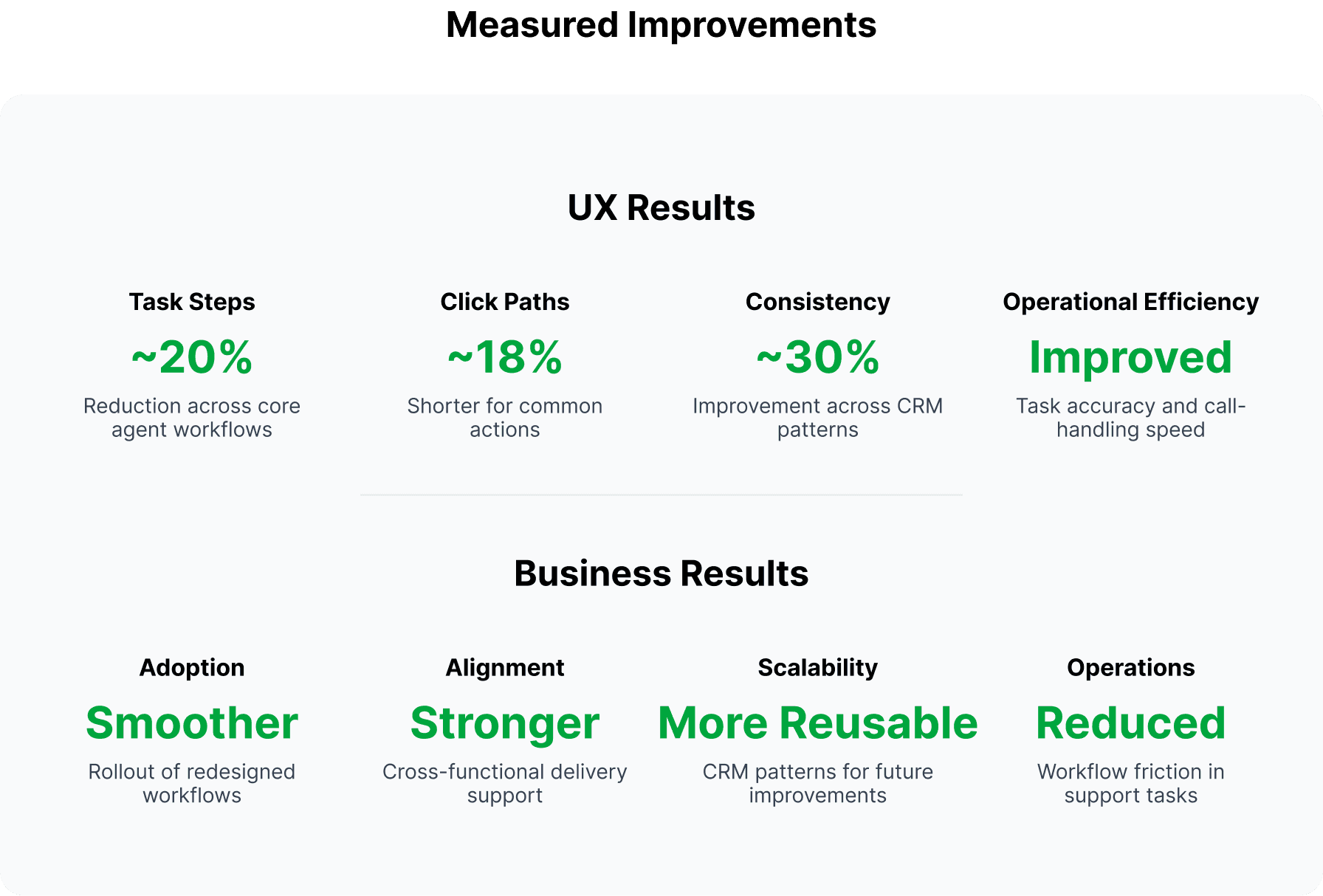
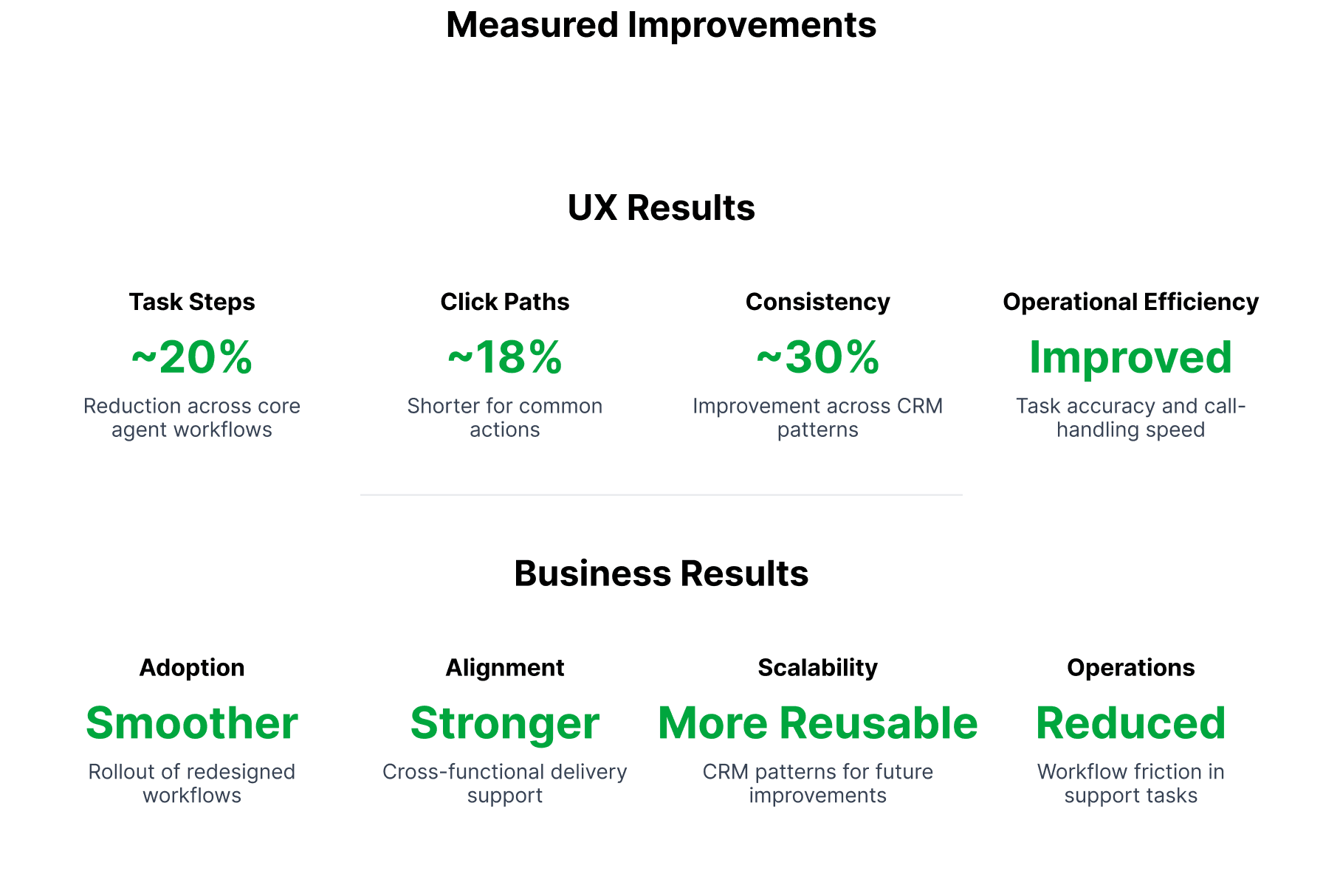
The redesigned CRM was validated through testing and rollout feedback, with improvements focused on task clarity, navigation efficiency, and interface consistency.
The redesigned CRM was validated through testing and rollout feedback, with improvements focused on task clarity, navigation efficiency, and interface consistency.
What This Journey Taught Me
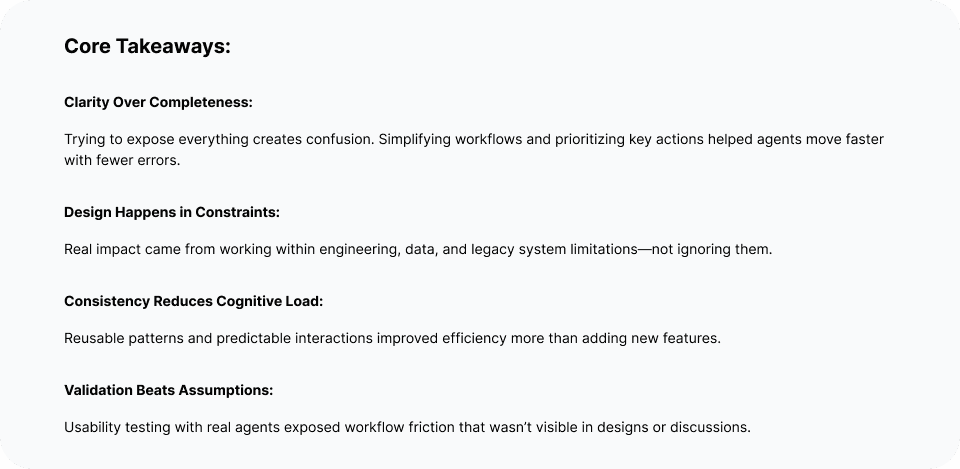
This project showed that enterprise CRM systems are operational trust systems. Every unclear workflow, extra step, or inconsistent pattern slows agents and affects service delivery. By simplifying workflows and improving navigation, the goal wasn’t just better UI, it was enabling faster, more reliable support operations.
What This Journey Taught Me
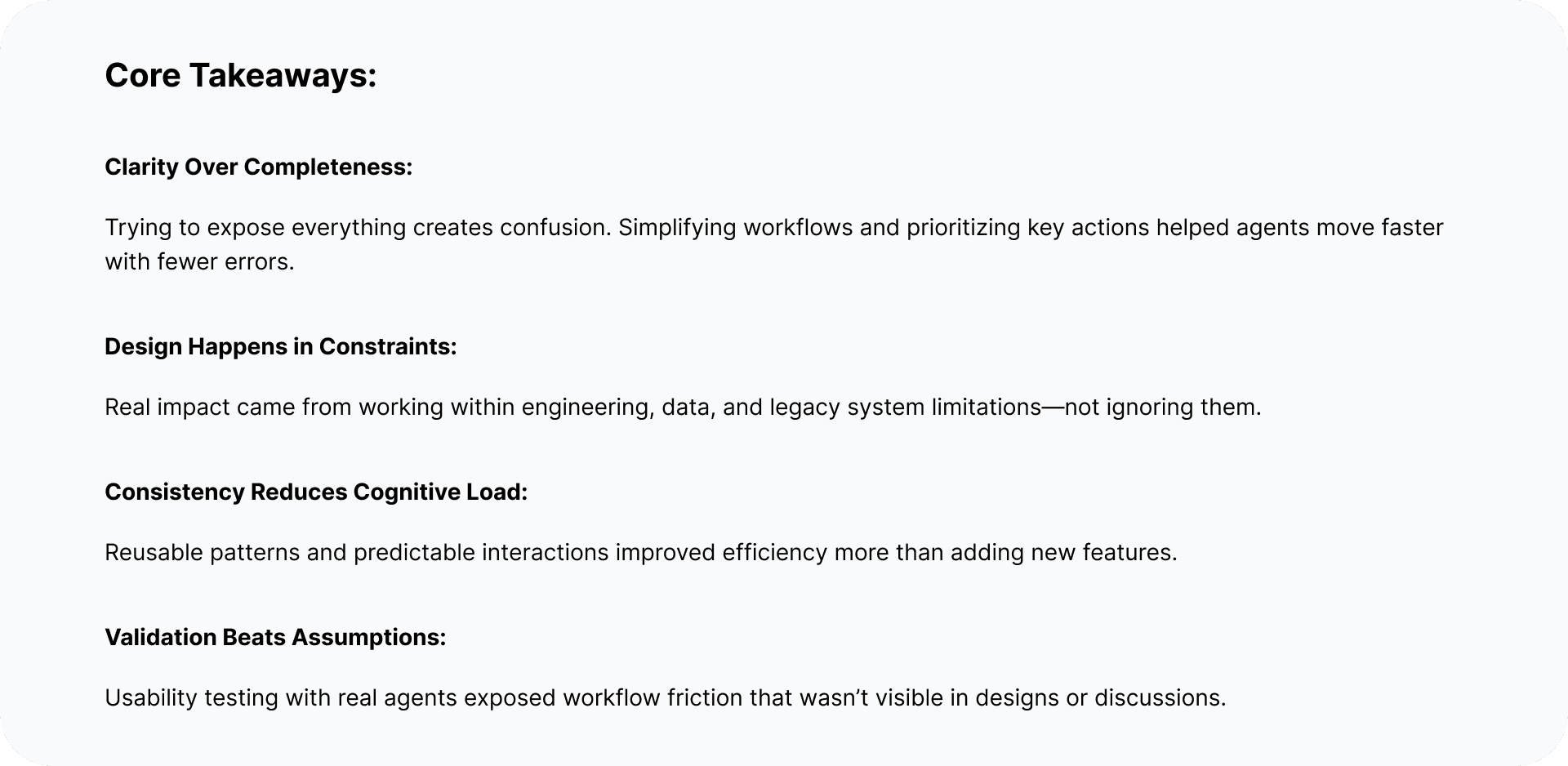
This project showed that enterprise CRM systems are operational trust systems. Every unclear workflow, extra step, or inconsistent pattern slows agents and affects service delivery. By simplifying workflows and improving navigation, the goal wasn’t just better UI, it was enabling faster, more reliable support operations.
Continuing Evolution
The CRM transformation didn’t end with redesigns, it created a foundation for ongoing improvement:
Scalable workflows that adapt to new telecom services
Stronger design system enabling faster future releases
Improved alignment between product, design, and engineering teams
Continuous validation through real user feedback
This project reinforced why I focus on product design, not for visual output, but for improving real workflows. In a high-volume CRM, impact comes from reducing friction and helping agents complete tasks faster and more accurately.
The work doesn’t end at launch. Systems evolve, and success depends on continuously identifying friction, validating improvements, and iterating based on real agent behavior.
Continuing Evolution
The CRM transformation didn’t end with redesigns, it created a foundation for ongoing improvement:
The CRM transformation didn’t end with redesigns, it created a foundation for ongoing improvement:
Scalable workflows that adapt to new telecom services
Stronger design system enabling faster future releases
Improved alignment between product, design, and engineering teams
Continuous validation through real user feedback
This project reinforced why I focus on product design, not for visual output, but for improving real workflows. In a high-volume CRM, impact comes from reducing friction and helping agents complete tasks faster and more accurately.
This project reinforced why I focus on product design, not for visual output, but for improving real workflows. In a high-volume CRM, impact comes from reducing friction and helping agents complete tasks faster and more accurately.
The work doesn’t end at launch. Systems evolve, and success depends on continuously identifying friction, validating improvements, and iterating based on real agent behavior.
The work doesn’t end at launch. Systems evolve, and success depends on continuously identifying friction, validating improvements, and iterating based on real agent behavior.